
Your product is specific.
The problem usually isn't.
AI inspection for manufacturers outside the industries we list separately — the same platform, trained on whatever it is you make.
Test it on your productThe Hard Case
Four questions cover most of what any line needs to check.
Industry pages are useful because environment and evidence requirements differ. The inspection questions themselves differ far less. Across almost every manufacturing line, the checks reduce to four: is it damaged, is it the right size and shape, is everything there, and is it the right thing.
If your product does not fit the industries listed separately, that is usually a question of environment and evidence rather than capability. The platform is industry-agnostic — what an industry page adds is knowledge of the conditions we already design for.
The honest position is that we would need to see your product before saying anything more specific, which is what the feasibility check is for.
The feasibility check is the answer to an unusual product.
Send images of the defect that matters. We train a model and report what we find, including when your current imaging cannot support it.
Anomaly detection covers what you cannot collect.
Where defects are rare or varied enough that you cannot assemble examples of each, the model learns acceptable product instead and flags deviation from it.
What it checks
What most lines
need to check.
Is this unit damaged?
Defect detection
Cracks, scratches, dents, contamination, discolouration and finish flaws on the product or its packaging.
Does this look wrong, somehow?
Anomaly detection
Learns acceptable product and flags deviation — including faults you have never seen and could not have collected examples of.
Is it the right size and shape?
Measurement
Dimensions and form recorded as values for every unit, so drift is visible before units start failing.
Is everything there?
Completeness
Presence, position, orientation and count of components, fittings and features.
Is this the right product?
Identification
Confirms the variant running matches the job, catching mix-ups before they move downstream.
Is it labelled and readable?
Label & code
Label presence and position, with codes read and verified against expected content.
Is the appearance acceptable?
Surface & finish
Finish consistency, coating condition and cosmetic defects on visible faces.
Is the pack sound?
Packaging
Seal, closure, fill and pack condition before despatch.
Which grade is this one?
Classification
Sorts units by grade, variant or type at line speed so each goes where it should.
Built for the environment
Specified against your line,
not a generic one.
Because this page covers a range of processes, the environment is established during the feasibility assessment rather than assumed here.
ENVIRONMENT
Built for stability. Designed for real-world conditions.
- ContaminationHousings and sealing appropriate to your process
- Vibration and heatMounting and placement specified for your equipment
- Cleaning regimeMaterials compatible with how the area is cleaned
- Line speedInspection specified against your actual rate
- Space and accessMounting designed around existing guarding and layout
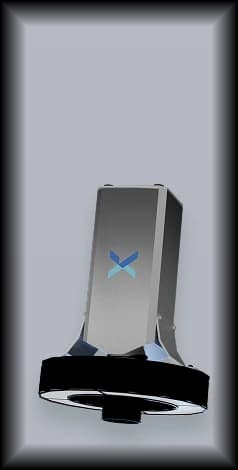
IMAGING
Clearer vision. Smarter inspection.
- Colour and appearanceRGB industrial cameras
- Geometry and depth3D sensing where form matters beyond the outline
- Fine detailResolution matched to your smallest defect at working distance
- Reflective surfacesControlled lighting geometry for specular materials
- Codes and textOCR, OCV and code reading
- Continuous webLine-scan for sheeted and continuous product
On lighting. Illumination is specified per application and validated on your material during the trial. Ambient-light dependence is the most common reason vision systems drift after installation, so lighting is designed as part of the system rather than added around a camera.
Where the record matters
Whatever you make
someone eventually asks.
The specific obligations differ by sector, but the underlying need is consistent — evidence of what was inspected and what was found.
Per-unit records
Every unit inspected is logged with its result, its measured values and an image reference, on your own infrastructure.
Customer questions
A query about a specific delivery or window has a documented answer rather than a reconstruction from sampling records.
Trend visibility
Continuous measurement shows a process drifting before it produces scrap, which is the difference between an adjustment and a rework batch.
The platform
Same three components,
tuned to your product.



Standards & codes
Which standards apply depends
on what you make.
The published criteria your customers, auditors and quality team already reference. We train models against your interpretation of these standards — we do not certify conformance to them, and an inspection result is not a conformity assessment.
ISO/IEC 15416 & 15415
What it covers
Print quality grading for 1D and 2D codes, A to F. Applies wherever a code has to be read reliably by someone downstream.
Where it applies
Barcode and data matrix verification
ISO 5817 & ISO 6520-1
What it covers
Quality levels for imperfections in fusion-welded joints, and the classification system used to designate them.
Where it applies
Visual weld inspection, where you weld
Common questions
What manufacturers ask first.
By testing it rather than discussing it. Send images of the defect that matters and we train a model on your product, then report honestly what we find — including when the answer is that your current imaging cannot support it.
- We do not have many examples of the defect. Is that a problem?
- How many images do you need to start?
- Can it run several different checks at once?
- What do we need to install it?
Still deciding
The one question this page can't answer:
does it work on your defect?
Start here
Send us your images
Share examples of the defect you care about. We train a model on your product and come back with a straight answer — including if it's no.
Start a feasibility checkOr ask directly
Talk to an engineer
Thirty minutes with someone who builds this. Bring your line speed, your defects and your integration constraints.
Get a demo