
Thousands of items an hour.
None of them the same.
AI inspection for logistics and packaging — label and barcode verification, pack condition and case counts at throughput, before goods leave the building.
Test it on your productThe Hard Case
The variety is the problem,
not the speed.
A production line inspects one product at a time. A despatch line inspects whatever arrives next — different sizes, different materials, different label positions, arriving in no particular order at full conveyor speed.
That makes fixed inspection rules almost unusable. There is no single expected appearance to compare against, and writing a rule per SKU does not scale past the first few hundred.
What generalises is training the model on the variety itself, so the same inspection point handles a mixed flow rather than requiring the flow to be sorted first.
One inspection point, many formats.
A single xis.rt instance handles mixed product flow, each item checked against what it should be rather than against one fixed template.
The cheapest error to catch is the one still in the building.
A wrong label or short case found at despatch costs a re-pack. Found by the customer, it costs the relationship.
What it checks
The checks an despatch operation
actually needs.
Right label, right item?
Label verification
Correct label present, positioned and legible on mixed product moving at conveyor speed.
Does the code scan and match?
Barcode & code reading
Barcode and data matrix read and verified against what should be on that item.
Is it fit to ship?
Pack condition
Crushing, tears, water damage, open flaps and closure condition before despatch.
Is the count correct?
Case & tray count
Units per case, tray or layer counted and verified before closing or wrapping.
Is this what the order says?
Item identification
Confirms the item matches the expected product for that order or lane.
Is it closed properly?
Seal & closure
Tape, seal and flap condition on cases and outer packaging.
Is the load built correctly?
Pallet & load
Layer count, overhang, stacking pattern and wrap condition before despatch.
Did it arrive intact?
Damage at receiving
Inbound pack and pallet condition recorded on receipt, with images retained.
Is it presented correctly?
Orientation & placement
Item orientation and position on conveyor, tray or pallet for the next operation.
Built for the environment
Dust, speed, mixed formats
and long conveyor runs.
Logistics environments are less hostile than manufacturing but far more variable. These are the conditions the hardware is specified against.
ENVIRONMENT
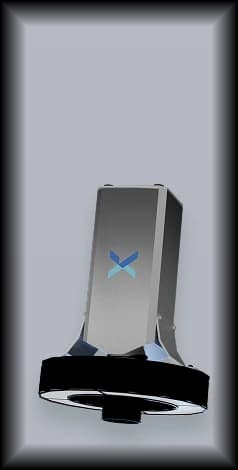
Built for stability. Designed for real-world conditions.
- ThroughputInspection specified against your actual items-per-hour rate
- Format varietyImaging designed for the range of sizes and materials in the flow
- DustSealed optics with a defined cleaning interval
- VibrationMounting isolated from conveyor and sorter movement
- Ambient lightControlled illumination against changing daylight in dock areas
IMAGING
Clearer vision. Smarter inspection.
- Mixed sizesField of view and depth of field covering the format range
- Labels and codesResolution matched to the smallest code in the flow
- Reflective film and tapeControlled lighting geometry for wrapped and taped surfaces
- Moving productExposure and triggering specified for conveyor speed
- Multiple facesSeveral inspection points where label position varies
- Large loadsWider field of view for pallet and load inspection
On lighting. Dock and despatch areas have the worst ambient light conditions on any site — doors open and close, daylight changes through the day, and product surfaces range from matt card to reflective wrap. Controlled illumination is specified so the inspection does not vary with the weather.
Where the record matters
Most disputes are about
what left the building.
In logistics, the record is often worth more than the detection, because the argument happens after the goods have gone.
Proof of despatch condition
Every item inspected is logged with its result and an image reference, which answers a damage or short-shipment claim with evidence rather than recollection.
Inbound condition
The same inspection applied at receiving records what arrived and in what condition, which is where responsibility for damage is usually contested.
Accuracy trends
Labelling and count errors show as a trend by lane, shift or operator, which is what makes them fixable rather than recurring.
The platform
Same three components,
tuned to your product.



Standards & codes
The standards your codes
are graded against.
The published criteria your customers, auditors and quality team already reference. We train models against your interpretation of these standards — we do not certify conformance to them, and an inspection result is not a conformity assessment.
ISO/IEC 15416
What it covers
Print quality for 1D barcodes. The code is scanned across ten lines, each graded A to F on decode, minimum reflectance, edge contrast, modulation, defects and decodability, with the overall grade averaged across the ten.
Where it applies
Barcode verification at despatch and receiving
ISO/IEC 15415
What it covers
Print quality for 2D codes. Must pass decode first, then grades on symbol contrast, modulation, fixed pattern damage and axial and grid non-uniformity, with the lowest parameter grade setting the overall grade.
Where it applies
Data matrix and QR verification on labels and cases
ISO/IEC TR 29158
What it covers
Direct part mark quality. The DPM variant of 15415, with additional lighting angles for codes on curved, reflective or dot-peened surfaces.
Where it applies
Marked items, returnable assets and containers
Logistics questions
What logistics teams ask first.
No, and that would not scale. The model is trained on the variety in your flow rather than on a template per SKU, so a single inspection point handles mixed product. New formats are added by your own team in xis.dev.
- Can it keep up with our conveyor speed?
- Our dock doors are open all day. Does the light change break it?
- Can we use our existing cameras?
- What record does it keep for claims?
Still deciding
The one question this page can't answer:
does it work on your defect?
Start here
Send us your images
Share examples of the defect you care about. We train a model on your product and come back with a straight answer — including if it's no.
Start a feasibility checkOr ask directly
Talk to an engineer
Thirty minutes with someone who builds this. Bring your line speed, your defects and your integration constraints.
Get a demo