
Pharmaceutical Vial Inspection: Identifying Visible Defects in Glass Containers

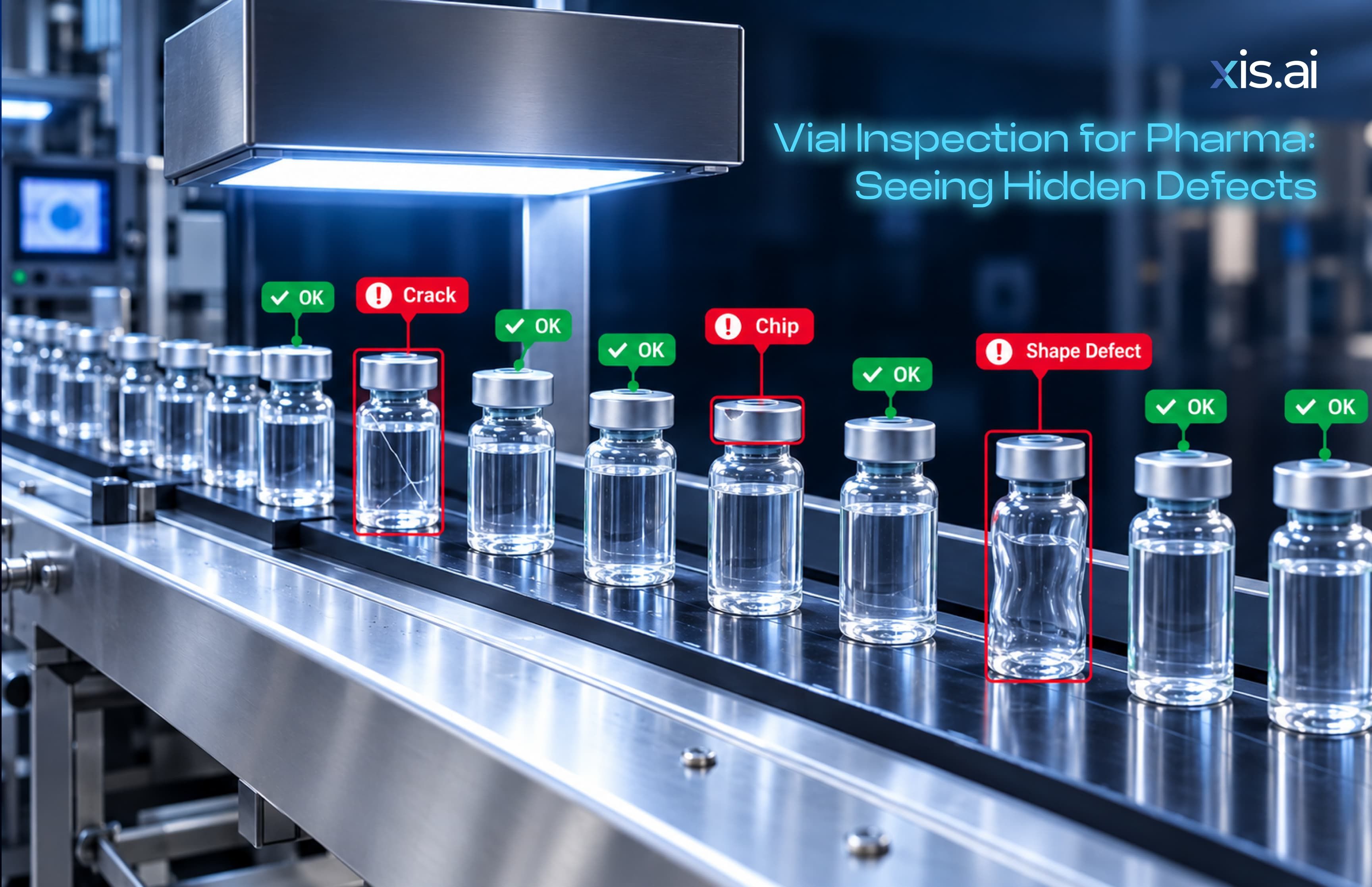
A pharmaceutical vial can look clean and correctly formed while carrying a small defect near its rim, neck, or glass wall. Under production lighting, a scratch may resemble a reflection, while a chip along the opening can be difficult to distinguish from the container’s natural contours.
These details matter in pharmaceutical packaging. Glass damage can affect container quality, create handling concerns, or require a vial to be rejected under established inspection criteria. As production volumes increase, manufacturers need consistent methods for identifying visible defects without confusing normal glass variation with damage.
AI-powered visual inspection can help by analyzing vial images for specified surface defects. But glass is a challenging inspection material, and the system's ability to detect a defect depends on whether the relevant feature is visible under the chosen imaging conditions.
Start With the Glass, Not the Algorithm
Transparent glass presents a different inspection challenge from opaque packaging. Its curved surface bends light, creates reflections, and can distort the appearance of small marks. A feature visible from one angle may disappear from another.
This makes image acquisition central to vial inspection. Camera positioning, lighting direction, focus, and resolution all influence the visual information available to an AI model. A single viewpoint may not provide adequate coverage of every surface that matters.
Before selecting a model, the inspection requirement should therefore be defined precisely: which visible defects must be identified, where they occur, and under what conditions they need to be detected?
For pharmaceutical vials, several external defect categories are particularly relevant.
Four Defects That Deserve a Closer Look
1. Chips around the rim and neck
The vial opening and neck are important areas to inspect for visible chips, broken edges, and irregularities. Damage in these locations may affect the container's suitability for further processing and should be assessed against the applicable acceptance criteria.
AI vision can be trained to identify specified, visible edge defects when the relevant features are captured clearly. The imaging arrangement must distinguish actual damage from reflections and normal variations in the glass.
2. Surface scratches and abrasions
Vials may acquire scratches through contact with handling equipment, other containers, or packaging surfaces. Some marks are obvious; others appear as faint lines that change with the viewing angle.
Computer vision models can help flag defined scratch patterns, provided image quality and contrast are sufficient. Training and validation should include representative examples of both acceptable glass surfaces and the scratches the inspection process is expected to identify.
3. Visible cracks and fractures
Cracks that are visible on the exterior glass surface can be important inspection targets. Their appearance may vary with the crack's orientation, the curvature of the vial, and the surrounding lighting.
A crack that is difficult to distinguish in one image may be more apparent from another viewpoint. Multiple camera angles or a suitable lighting arrangement may therefore be necessary, depending on the vial design and inspection requirements.
However, detecting visible cracks is not the same as proving that a vial is free from all structural damage. A camera-based surface inspection cannot reliably rule out hidden cracks that do not produce a detectable visual feature.
4. External marks and surface irregularities
Visible residue, unexpected marks, and other external irregularities may also be relevant, depending on the manufacturing process and cleanliness requirements. These conditions need clearly defined inspection criteria so that harmless variations are not automatically classified as defects.
The model should be evaluated against actual production images, including the normal differences in glass appearance that occur across acceptable containers.
Why a Defect Can Disappear in an Image
Glass inspection is particularly sensitive to the relationship between the defect, the light source, and the camera.
A bright reflection can resemble a scratch. A genuine surface mark may blend into the background when the lighting angle changes. A small chip near the rim may be hidden by the container's curvature when viewed from the wrong position.
Three practical considerations help address these challenges:
- Lighting and contrast: Illumination should make the target defect distinguishable from the surrounding glass.
- Surface coverage: The camera arrangement should capture the relevant inspection areas without relying on a viewpoint that leaves important features obscured.
- Representative validation: The model should be tested using realistic examples of acceptable vials and visible defects, under conditions representative of the intended inspection process.
Performance should be established for the particular vial design and inspection conditions. A model that identifies prominent chips under controlled lighting should not automatically be assumed to detect every fine scratch or hairline crack in production.
For related pharmaceutical packaging applications, see our guides to tablet inspection for chips, cracks, and shape defects and cap inspection for missing and visibly misaligned closures.
Where xis.ai Fits Into Vial Inspection
xis.ai provides a computer vision platform for developing and deploying AI-based visual inspection models. For pharmaceutical vials, its relevant application is identifying defined, visible surface defects in glass containers.
The inspection model can be developed around target conditions such as visible chips, scratches, and external damage. Its performance must then be evaluated against representative images and the acceptance criteria relevant to the application.
The value lies in applying consistent visual inspection criteria to suitable images—not in claiming that every vial defect can be detected regardless of its visibility. A successful implementation depends on the imaging arrangement, the defects being assessed, and demonstrated performance under realistic inspection conditions.
Where pharmaceutical quality requirements extend to internal particulates, hidden structural damage, or precise fill-volume verification, the appropriate complementary inspection method must remain part of the quality-control process.
Frequently Asked Questions
Can ordinary camera inspection detect particles inside a vial?
Not reliably through exterior surface images alone. Internal particulate inspection requires an appropriate, validated inspection setup designed to assess the vial's contents.
Why might vial inspection require multiple camera angles?
The curvature and transparency of glass can obscure surface defects from certain viewpoints. Additional views may improve coverage of the relevant inspection areas.
Does a vial that passes visual inspection have no defects?
No. Passing a defined visual inspection means the assessed features met the inspection criteria. It does not establish the absence of every hidden defect or replace other required pharmaceutical quality checks.
Comment
0Comments
No comments yet.