
AI-Powered Composite Material Inspection: Detecting Surface Defects Before They Escalate

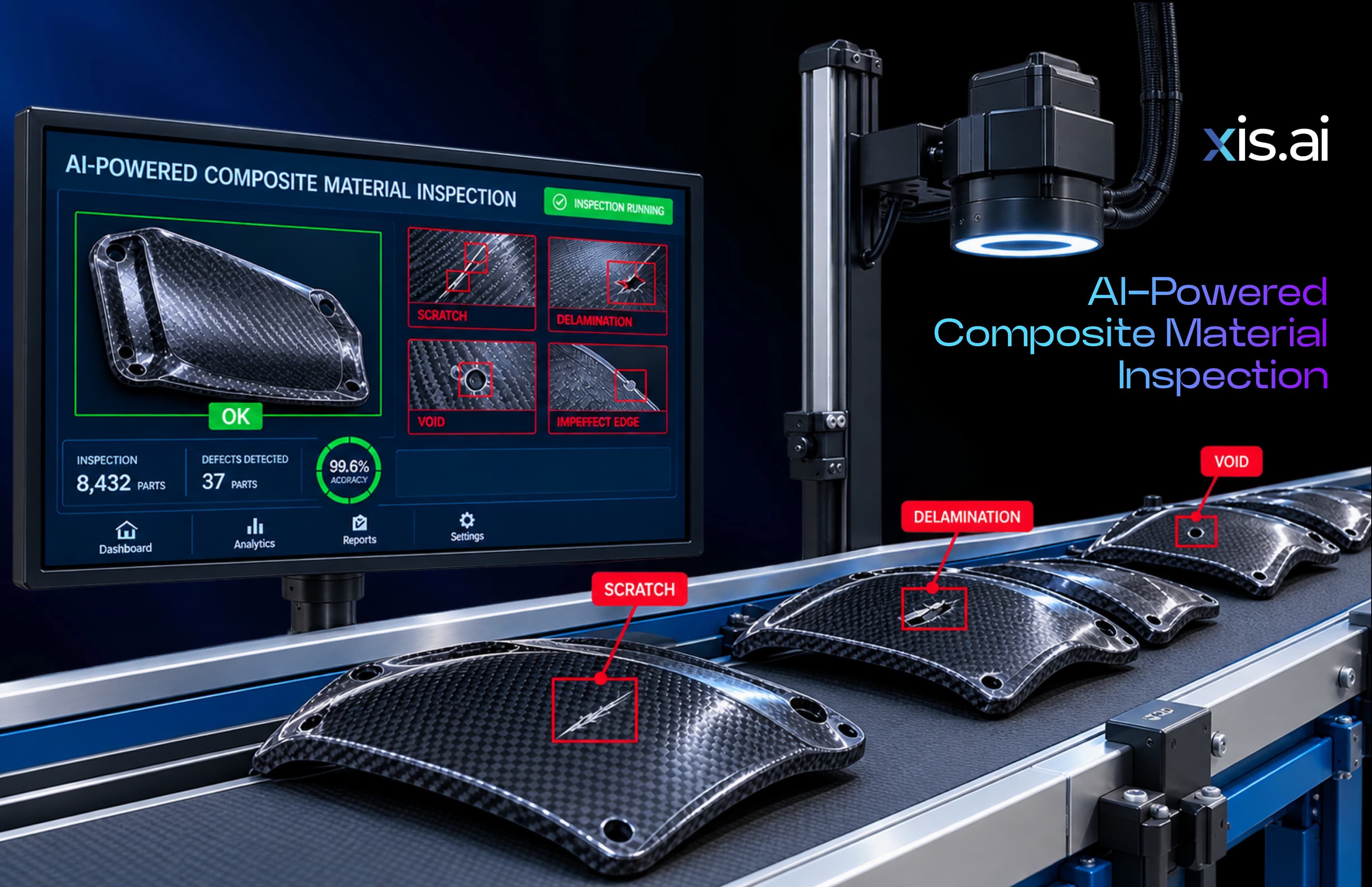
Why Composite Surface Inspection Matters
Composite materials such as carbon fiber reinforced polymer (CFRP) and fiberglass are widely used in aerospace, automotive, wind energy, and industrial manufacturing. Their combination of strength, low weight, and design flexibility makes them suitable for demanding applications. Maintaining consistent surface quality, however, can be challenging.
Carbon-fiber components often have distinctive woven patterns and reflective finishes. A scratch can blend into the natural texture, a chipped edge may escape notice during a quick inspection, and coating damage can become difficult to distinguish under inconsistent lighting.
These challenges make surface inspection an important part of composite manufacturing and quality control. Missed imperfections can lead to rework, rejected components, or additional checks before a part is approved.
AI-powered visual inspection helps identify specified surface defects by analyzing images for recognizable visual patterns. Its effectiveness depends on image quality, defect visibility, representative training data, and application-specific validation.
Four Common Surface Defects in Composite Materials
The defects that matter most depend on the material, manufacturing process, component design, and quality requirements. Common examples include:
1. Scratches and Abrasions
Scratches can develop during machining, handling, transportation, or assembly. On carbon-fiber components, they may resemble the material’s natural weave, making them difficult to distinguish from acceptable surface patterns.
AI models can be trained to identify specified scratches and abrasions using their visible characteristics. Representative images should account for variations in scratch appearance, lighting, and surface finish.
2. Exposed or Frayed Fibers
Visible fibers protruding from a composite surface or cut edge may indicate localized surface damage or machining irregularities. These conditions can range from a few loose strands to more noticeable fiber breakout.
Computer vision models can flag such conditions when they are sufficiently visible in captured images and represented in the training data.
3. Chipped Edges and Surface Gouges
Cutting, trimming, machining, and handling can leave composite components with chipped edges, gouges, or localized material breakouts. Depending on the component’s requirements, these imperfections may need further examination or corrective action.
AI visual inspection can be configured to identify specified, visible edge damage. Its ability to detect smaller or less distinct defects must be established through testing.
4. Coating and Finish Irregularities
Painted, coated, or finished composite components may exhibit visible peeling, discoloration, or localized finish damage. These irregularities can affect appearance and may indicate that a component needs closer inspection.
AI models can be trained to flag these visible conditions when they can be distinguished from normal surface variation.
Learn more about how computer vision detects surface imperfections.
Why Composite Surfaces Challenge AI Inspection
Identifying defects in composite materials involves more than recognizing an unusual mark. An inspection system must distinguish actual surface damage from normal variations in material appearance.
- Natural fiber patterns: Carbon-fiber weaves can resemble scratches or irregularities. Training data should include both acceptable surfaces and defective examples.
- Reflective finishes: Glossy coatings create highlights and shadows that change with viewing angles. Inconsistent lighting can obscure defects or introduce misleading visual features.
- Variation in defect appearance: Scratches, chipped edges, and exposed fibers differ in size, contrast, shape, and location. Models trained on limited examples may not perform consistently across these variations.
- Image quality: Camera focus, resolution, lighting, and component positioning determine which details are visible. A defect that cannot be distinguished in the captured image cannot be reliably identified through image-based inspection.
Representative training data, consistent image acquisition, and realistic validation are therefore essential. A model should be evaluated against the actual surface conditions and defect categories relevant to the intended application.
For more examples of how inspection requirements vary by sector, explore our guide to AI visual inspection across industries.
How xis.ai Supports Composite Surface Inspection
xis.ai enables the development and deployment of computer vision models for manufacturing inspection. For composite materials, xis dev supports image labeling, model training, and evaluation, helping develop models around defined surface defects such as scratches, exposed fibers, chipped edges, and coating irregularities. Validated models can then be deployed through xis.rt into suitable inspection workflows.
The focus is on identifying specified, visible surface defects consistently. Detection performance depends on image quality, representative training data, and application-specific validation. The model’s performance must be established for the particular material, surface finish, and inspection conditions rather than assumed across all composite components.
Conclusion
Composite materials present distinctive surface-inspection challenges because natural fiber patterns, reflective finishes, and variations in defect appearance can make imperfections difficult to identify consistently. AI-powered visual inspection can help identify specified visible defects, including scratches, exposed fibers, chipped edges, and coating irregularities.
Through xis dev and xis Runtime, xis.ai supports the development, evaluation, and deployment of computer vision models for surface inspection. Reliable results depend on suitable imaging, representative data, and application-specific validation. For hidden internal defects, complementary inspection methods remain essential.
Frequently Asked Questions
What surface defects can AI detect in composite materials?
Depending on model training and validation, AI can identify visible scratches, abrasions, exposed fibers, chipped edges, gouges, and coating irregularities.
Can xis.ai detect internal delamination or hidden voids?
Not through ordinary surface-image inspection. Hidden internal defects require suitable complementary inspection methods, such as ultrasonic testing or industrial X-ray/CT inspection.
How does xis.ai support composite surface inspection?
xis.ai supports model development through xis dev, including image labeling, training, and evaluation, and model deployment through xis Runtime. These capabilities support inspection workflows targeting specified visible surface defects.
Comment
0Comments
No comments yet.